
Why are women so obsessed with true crime? And is it all ‘bad’?
In the 2023 HBO documentary, Love Has Won: The Cult of Mother God, the life of self-proclaimed spiritual saviour Amy Carlson is chronicled through the eyes of her once devoted followers. Carlson’s transformation – from fast food manager to the matriarchal leader of a New Age group accused of fraud, brainwashing, and abuse – is a disturbing yet fascinating watch.
Unlike her male ‘cultic’ counterparts (you know, Jim Jones, Charles Manson, etc), Amy Carlson’s infamy felt different. Her unusual, conspiracy-driven life had piqued my interest and left me wanting to learn more about women like her. And it seemed streaming platforms were all supportive of my newfound hobby with the algorithm churning out a suite of true crime documentaries where ‘good’ girls go ‘bad’: I Love You, Now Die: The Commonwealth v. Michelle Carter, Sins of Our Mother, and Devil in the Family: The Fall of Ruby Franke, to name a few.
Overnight I became a true crime enthusiast. But what was it about these stories that had me coming back for more? Was it simply because these were women at the helm of abuse, cultic coercion, and murder – a rarity within society, where men commit the majority of violent crimes. I wanted to understand why these women committed such horrific acts, and why was I so obsessed with watching their downfall?
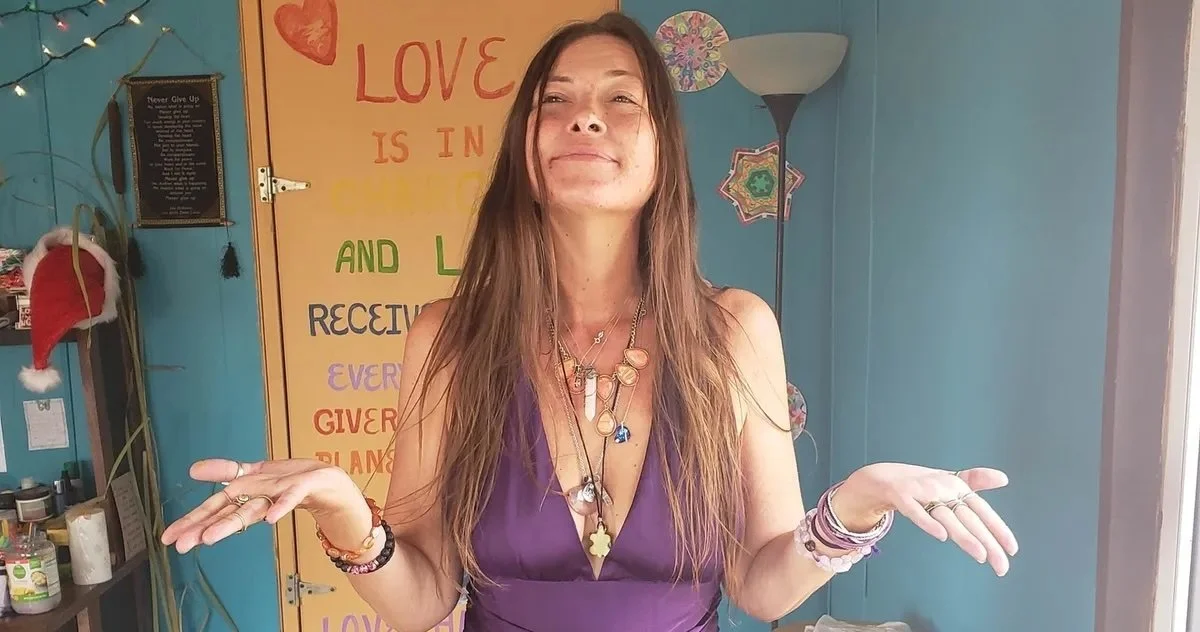
Amy Carlson was the leader of Love Has Won – often described as a cult by former members and media outlets.
Women love true crime
True crime storytelling has come a long way since Unsolved Mysteries and The Thin Blue Line first hit screens in the late 80s. The past decade has ushered in a new wave of true crime enthusiasts where “trauma porn” has never been easier to access via podcasts, social media, and binge-worthy television. The 2014 debut of Sarah Koenig’s podcast Serial reshaped true crime storytelling in the 21st century and brought fresh attention to wrongful convictions through investigative journalism.
Since then, the genre’s popularity – and streaming platforms demand for new content – has fuelled a surge in the documentary format. Never-before-seen archival footage, gripping reenactments, audio recordings and present-day interviews are packaged into a dramatic narrative that keeps audiences hooked from start to finish.
Despite true crime initially marketed towards men, today women make up the majority of its audience. Some psychologists have found that, by consuming true crime media, women learn survival strategies and defence tactics. As 30 per cent of women globally have been subjected to either physical and/or sexual violence in their lifetime, it seems fitting that many seek out these documentaries as case studies in survival – a ‘what to do’ if you find yourself in a life or death situation.
On the other hand, scholars claim that true crime media can foster communities of women who connect through shared experiences of violence or seek to understand the psychology of abusers, which provides them with a sense of empowerment by validating their fears and concerns in reality.
ABC true crime reporter, Rachael Brown reaffirms this idea, stating in a podcast on the highly publicised Erin Patterson Murder Trial, that “as humans we are fascinated by peoples’ behaviour and why they do things and what they are driven by…”
Brown is onto something here. I think what pulled me in to watching the women-focused true crime documentaries in the first place was a desire to understand the perpetrators. To get inside their minds, find out what they believed, what they feared, and which psychological or circumstantial forces drove them toward the edge of violence.
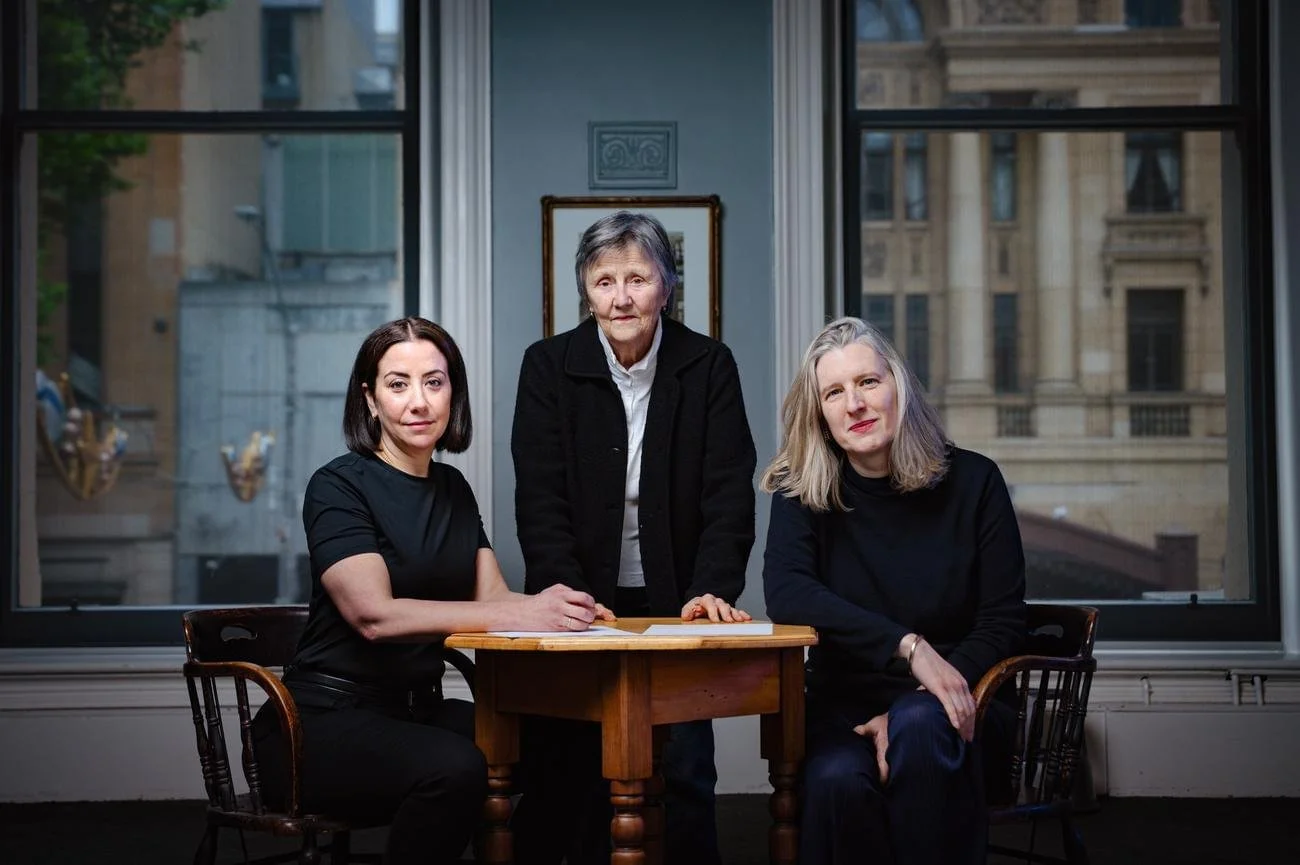
Three amazing writers equally obsessed with the Mushroom Trial, just like me! Left-to-right: Sarah Krasnostein, Helen Garner, Chloe Hooper. Photograph Darren James, 2025.
What is “bad” true crime?
When we think of true crime, it’s easy to picture blood-soaked carpets, close-ups of murder weapons, and graphic reenactments. With imagery like this, it’s no surprise the genre has faced its share of criticism.
When Communications Professor Lindsey A. Sherrill asked her interview subjects to define true crime, they responded in the same way: “while they couldn't define bad true crime, they all knew it when they saw it.”
After sifting through countless internet articles, threads, and academic scholarship on true crime, it seems the general consensus for what we consider “bad” comes down to whether the story:
Mirrors the sensationalist aspects depicted in mainstream media
Is exploitative
Focuses solely on the biographies or actions of their perpetrators, not victim-survivors
Includes graphic reenactments of violence that objectifies victims-survivors
When women are the perpetrators in these poorly made true crime docos, they’re often portrayed as other-worldly, hysterical, monstrous, or pure evil. They’re women who fail to reflect the Jungian archetype of the “perfect mother”. A trope that essentially denies a woman’s agency to commit crimes and used to justify perceptions of ‘failed femininity.’
We see this in Devil in the Family: The Fall of Ruby Franke (2025). A mother of eight, Ruby Franke initially wins public affection through her wholesome YouTube vlog, “8 Passengers” showcasing the routines of a seemingly nurturing caregiver. However, behind the scenes, child abuse was taking place. The documentary effectively incorporates previously unseen footage and firsthand accounts from Franke’s husband and eldest children. But it leans heavily on a simplistic narrative arc: the rise and fall of a devoted mother to “she-devil”, leaving little room for complexity or deeper interrogation of the structural and psychological factors of her actions.
Is there such a thing as “good” true crime?
So then, if we “know” what bad true crime looks like, then what is good true crime?
To me, this is true crime storytelling that is grounded in thorough research and investigative depth. These stories avoid sensationalism in favour of nuanced portrayals of victim-survivors, validating their testimonies, and showing awareness of the systemic workings of gendered violence.
A great example is the documentary Seduced: Inside the NXIVM Cult (2020). Survivor India Oxenberg narrates the four-part series about Keith Raniere’s sex cult. It’s difficult not to be drawn in by Oxenberg’s emotive account – still clearly processing the psychological impact of her experiences. Instead of depicting graphic reenactments, the filmmakers focus on the testimonies of former members and expert opinions from doctors and academics. When members do recount their traumatic memories, animated illustrations are thoughtfully used, ensuring the portrayal is sensitive rather than salacious.
Two further documentaries that fit within this good category (but yet, still have their flaws) include Beware the Slenderman (2016) and I Love You, Now Die: The Commonwealth V. Michelle Carter (2019). Cassandra Dana observes that the filmmakers challenge the existing ‘monster trope’ by contrasting scenes of sensationalised media hype with expert interviews or through montage to reframe the perpetrator’s stories. This provides context and nuance to the lives of the young female perpetrators revealing the circumstances, behaviours, and psychology at play, while offering a counter-perspective on the ‘good girl turned killer’ genre.
In the end, our obsession with true crime reveals far more about us than it does about the perpetrators themselves. These narratives touch on fear, curiosity, survival, and the complicated expectations we place on femininity. When done well, true crime has the power to challenge these assumptions, amplify victim‑survivors, and expose the systems that allow violence to flourish. When done poorly, it reduces complex human stories to a spectacle. Perhaps the real question isn’t why these women commit such acts, but what it is we’re seeking in their stories and what that search says about the world we’re trying to make sense of.