
My First Academic Conference (with Presentation Tips)
Earlier this month, I had the privilege of presenting my doctoral research at the Australasian Association for Writing Programs (AAWP) conference.
In its 30th year, the University of Melbourne hosted the 2025 AAWP conference, which brought together an eclectic mix of talks and projects spanning creative writing, publishing, and literature. It was a vibrant space for exploring ideas and connecting with fellow doctorate students, early career researchers, and established academics who share a passion for storytelling in all its forms.
While I was quite nervous to present at my first conference… what struck me most about the AAWP conference was its supportive atmosphere. Everyone – from seasoned academics to PhD candidates – was welcoming and genuinely interested in each other’s projects! A recurring sentiment was that this conference is a safe and encouraging space. Rather than harsh critique, the focus is on constructive engagement, offering insights that strengthen research and uplift the researcher. It was certainly the perfect way to ease into conference life and networking.
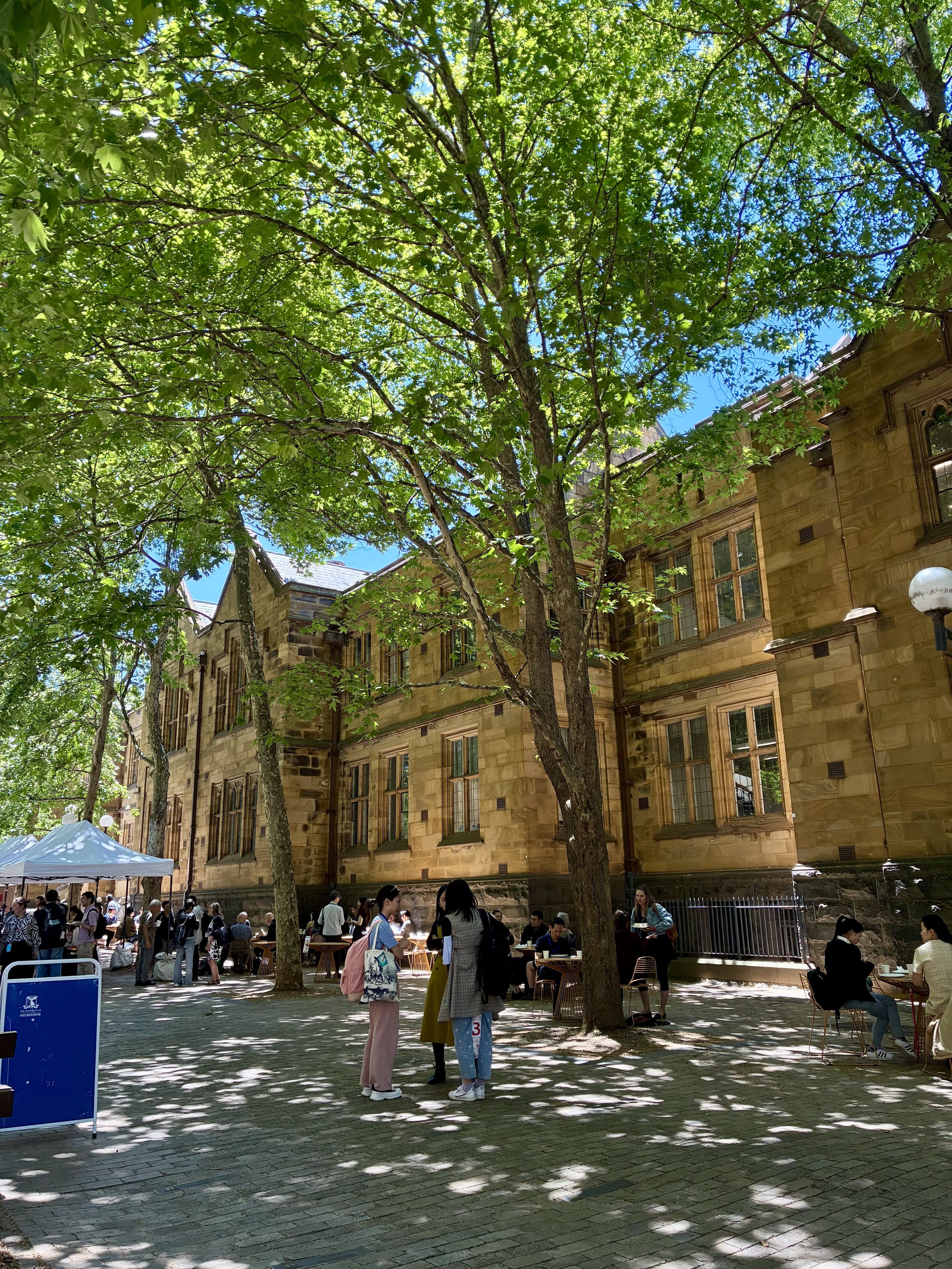
Beautiful summer weather at The University of Melbourne
From this positive experience, I thought I’d put together a few top tips for those doctoral students preparing to present at a conference for the first time. Here are my thoughts:
Tip 1: Prepare Early (and Practice!)
As I wasn’t to present at the conference until December, I started drafting my presentation back in August. That’s four months in advance. Now, I’m not saying you need to prepare that far ahead (I’ve heard of academics writing their talk the morning they present!), but for me, preparation was key to help ease my anxiety.
Since this was my first conference, I wanted to make sure I was on the right track. But you may not need as much time as me, so here’s how I’d probably approach it:
Weeks 1-3: Drafted my talk and shared it with my supervisor.
Weeks 4-5: Refined it based on feedback.
Weeks 6-7: Designed and polished my slides.
Final week: Practiced the talk over and over again.
Preparing a few months in advance allowed me to engage more with the audience instead of reading straight from my notes. The more I practiced, the more confident I felt and I could even recite key points from memory, which made my delivery more natural and connected.
Tip 2: Ask the Audience a Question
One of the most intimidating parts of presenting was the thought of the Q&A at the end of my talk. What if someone asks me a question that I can’t answer? What if they critique my research harshly? Or worse, what if no one asks anything?
Here’s a strategy that worked for me: ask the audience a question at the end of your presentation. It helps guide the discussion and takes some pressure off you for a few moments. For example, at the AAWP my talk focused on ethical storytelling, so I ended it by asking the audience something along the lines of:
“I’d like to open the floor to any questions. Perhaps you have recommendations for writing ethical true stories where historical records are limited?”
This approach does two things:
It invites engagement and gives the audience a starting point.
It signals that you’re a learning academic, open to ideas and collaboration.
And if you’re unsure how to answer a question, that’s okay! Try responses like:
“Great question – let me think about that and get back to you at lunchtime.”
“I’m not too sure – does anyone else have thoughts on that?”
Remember, conferences are about dialogue, not perfection. It’s certainly not uncommon to see seasoned academics unable to answer questions about their research. After all, everyone is still learning, that’s what research is all about.
Tip 3: Have a Visual Presentation
How you present your work is ultimately up to you, but if you’re speaking at a standard academic conference, I strongly recommend using visuals. A simple slideshow can make a huge difference. And Canva is so easy to use!
Yes, some presenters choose not to use slides (and that’s fine) but as a visual learner (and I know I’m not alone) if someone reads straight from a piece of paper for 20 minutes, I struggle to stay engaged. Visuals help your audience follow along, highlight key points, and break up the monotony of spoken text.
Your slides don’t need to be elaborate. Focus on:
Key information (not full paragraphs)
Images or diagrams that support your ideas
Clear, readable design
If you’re unsure where to start, universities often provide resources for creating effective conference slides. Purdue University was super helpful with slide design and public speaking resources available at the click of a button. A little effort here goes a long way in making your presentation memorable and accessible to those visual learners.