
What’s it like to live in an Anabaptist community?
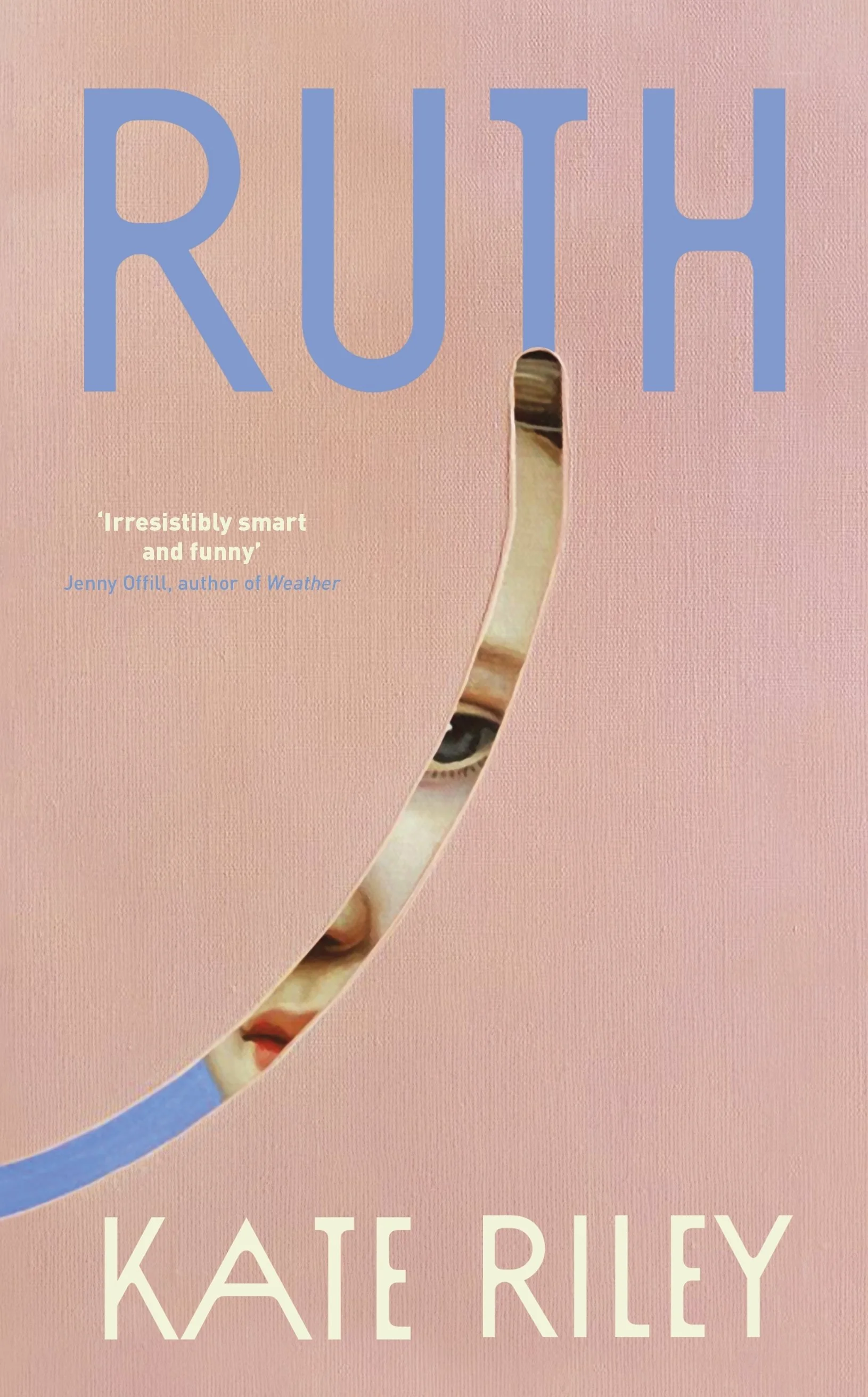
Ruth by Kate Riley, Book Review
When you think of Anabaptist Christians, familiar images might arise: Amish men guiding horse-drawn carts, Mennonite women in bonnets and plain dresses, Hutterite families gathering at long communal tables. Although these groups differ widely in customs, rules around technology, and engagement with the outside world, they are united by the core principles of adult baptism and a faith-centred Christian life marked by simplicity.
Today, an estimated four million Anabaptists live across the globe, inhabiting communities that range from highly insular to comparatively modern. But what exactly, is it like to grow up within one?
Kate Riley’s debut novel Ruth, named ‘Book of the Year’ in 2025 by several outlets, offers a quiet but penetrating look. Set within a fictional Hutterite group known as the Brotherhood, the novel traces the life of its protagonist from childhood through womanhood and into motherhood, across several communal villages (called Dorfs) in America’s Western Colonies.
Told in evocative vignettes rather than a conventional plot arc, Ruth resists easy conclusions. Instead, readers are left to sit with an unsettled question: is Ruth’s life one of contentment, sacrifice, or quiet suffocation. Or all three at once?
Living like the first Christians
The Brotherhood in Ruth is inspired by the Hutterites who descended from German Anabaptists. The Hutterites sought to live as the first Christians described in the Acts of the Apostles, where communities share possessions and live communally. In colonies of 60 to 150 people, they operate collective farms and remain distant from outside society, taking no part in politics.
As research for the novel, Riley spent some time within the Bruderhof, who are a real Hutterite movement with communities across Europe, Australia, and New Zealand. In an American chapter of the Bruderhof, she gained insight into what draws people into this lifestyle and what quietly drives others away. Men and women share meals in dining halls, sing together daily, and work where they are needed – on farms, in kitchens, or in workshops.
We meet many characters who come and go throughout the novel. While the protagonist, Ruth struggles with her own ambiguity regarding her beliefs, others appear fulfilled, finding solace and deep belonging amongst the community. However, there’s a clear theme throughout: individual ambition is treated as vanity, while sameness is considered devotion to one’s faith.
Yet Ruth is never didactic. Riley avoids hinting whether life in the Brotherhood is good or bad. The novel’s power lies precisely in what it withholds.

Horse and carriage are often the first images we associate with Anabaptist life, but they represent only one expression of a diverse faith. Kate Riley’s Ruth explores life within an insular Hutterite community.
Individuality is discouraged
The first part of the novel introduces us to Ruth as a restless, curious child. She is a cheeky jokester who does her best to avoid daily chores. Her mother frequently accuses Ruth of “buddling”: lingering over tasks, fussing, wasting time. It is an accusation loaded with meaning. “Buddling,” we learn, is something only girls can do. “As with lactation, boys would not or could not buddle,” writes Riley. It’s one of the first moments in the novel that we see how life in this insular Brotherhood is treated differently for girls.
As Ruth grows older, the prose settles into a rhythm of quiet observation. Ruth’s world is bounded by Scripture, hymns, recipes, and the daily donning of colony dress – “the perfect insult to vanity, and as such, a great tribute to God.” We learn that individuality is discouraged not through punishment, but through inherited uniformity. The removal of one’s individual self and the silencing of desire, is framed as holy, but taught as a sacrifice.
The same can be said about courtship. When permitted, marriage is regulated by the elders (referred to as Servants since titles are prohibited) who oversee and approve all relationships. Beauty, on the other hand, is viewed as suspicious amongst members. In one case, a woman’s attractiveness is described as an embarrassment that requires “vigilant censorship” to protect others from lust. It’s clear that even the body must be managed for the community’s moral survival.
Ruth leaves us asking, how can a sense of self emerge when moulds are pre‑cut, identities predetermined? They can’t. It’s something the character of Ruth struggles to deal with throughout her life. Even her curiosity about love and desire are met not with answers, but silence. She wonders whether her friends have ever been in love, but fears the question itself may be “entirely unchristian.” After all, “true love… was not a feeling but a commitment.”
No room for desire, unless it’s faith
In the second half of the novel, Ruth’s marriage to Alan Feder brings her ambivalence into sharper view. With motherhood comes not fulfilment, but estrangement from her children, from herself, from the role she is expected to inhabit seamlessly. The absence of maternal instinct, especially postpartum, is rendered without drama but with devastating clarity.
Even small assertions, such as naming her third child, a daughter, are denied. Her chosen name ‘Idea’ is replaced with one more traditional, more acceptable, ‘Gretel’ by her husband. As Ruth’s own ideas are rejected by those around her, more and more her inner world erodes.
There is no narrative climax, no rebellion or escape. Instead, Riley offers life as endured: measured, repetitive, faithful. Acceptance becomes Ruth’s virtue and her undoing. “As with all worldly ambitions,” Riley writes, “the desire was the disqualification, and the only way to get what she wanted was to stop wanting it.”
Ironically, the novel’s balanced approach is also what makes it feel tedious at times. For those expecting to read a book that exposes or condemns insular religions, look elsewhere. Instead, Ruth mirrors life itself – long and monotonous – but Riley’s beautifully written prose and traces of humour will encourage any reader to push on.
Overall, Ruth offers what may be one of the most accurate literary portrayals of life in a closed Anabaptist community. One that is neither romanticised nor vilified, but observed with restraint and empathy. It is a portrait of faith as endurance and of a woman whose life is defined by what is denied. Whether that life is misspent or meaningful is left, deliberately, for the reader to decide.
Title: Ruth
Author: Kate Riley
Published: 26 August 2025 | Penguin
Genre: Contemporary fiction, literary fiction, bildungsroman